Dr. Blackwell's BLOG

Wednesday, March 14, 2012

Theater Review: Broadway’s MEMPHIS

Filed under: Performing Arts — Dr. Christopher Blackwell @ 00:54

memphis-008.jpg

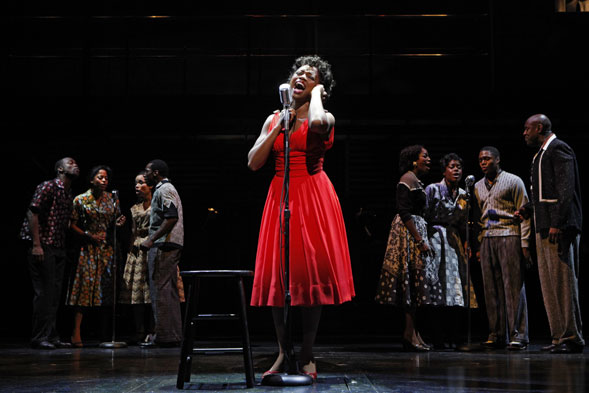
Last week, I had the opportunity to finally see one of my all-time favorite Broadway shows LIVE in New York City. MEMPHIS, the winner of the 2010 Tony Award for Best Musical, was filmed live on Broadway and streamed into movie theaters about a year ago and I had the opportunity to see the show then. I also bought the Blu-Ray of the show and have watched it countless times. But, this visit to NYC marked the first time I was able to actually see it live on stage. Needless to say, I was NOT disappointed. This show absolutely rocks in every sense of the word and depicts a truly powerful and historically-inspired story that really rips at the heart. The show centers on Felicia (played masterfully by Tony Nominee Montego Glover), a young black bar singer with an amazing voice with a talent just waiting to be discovered. And discovered it is, by young emerging white DJ Huey Calhoun (played by Adam Pascal), who is attempting to mainstream black music as “Rock ‘n Roll” on the radio.

Black culture, wonderfully displayed by an incredibly talented ensemble, is depicted as it both clashes and integrates with white culture, which is also depicted by the unbelievably talented ensemble. Felicia’s brother (played very well in this performance by stand-in Christopher Jackson) is trying to steer her to stardom while Huey is cultivating her for a career led by him in Memphis. The two fall in-love in a time when racial tensions in the South were at an all-time high; and interracial love was an absolute social taboo. Huey’s mother (played by Nancy Opel) is also unaccepting of the two’s courtship and like society at large, is experiencing a change that may be a little too rapid for comfort. MEMPHIS has an all-star cast of stellar performers, led of course by Glover, who’s dynamic voice and ability to show every nuance of her character makes her truly worthy of the praise she has received.

Pascal passes as Calhoun; but he pales in the shadow of the original actor who played the role, Chad Kimball, who unexpectedly had to leave the show in October of 2011 after suffering nerve damage. Kimball played the role flawlessly and like Glover, essentially invented the role at its inception at La Jolla.  I give Pascal credit for attempting to give the role a unique and individualized interpretation; but he acts the role, whereas Kimball was a complete natural. Even with Pascal’s different portrayal of Calhoun, MEMPHIS is one of the best musicals to ever grace the Broadway stage and I am unbelievably grateful for being given the opportunity to see it. The music and moving story of love, acceptance, personal growth, and evolution of understanding and tolerance of changing social mores makes an amazing impact on the spirit. My only hope is that in the future, I get the opportunity to see Chad Kimball reprise his role as Huey Calhoun in the show. But if that day never comes (thankfully, I can watch it whenever I want on Blu-Ray), that’s okay. Because this show will always be remembered as one of my theatrical favorites.
Wednesday, February 29, 2012

Theater Review: Love Never Dies

Filed under: Performing Arts — Dr. Christopher Blackwell @ 03:18

7053608_orig.jpg

When I first heard Andrew Lloyd Webber was working on a sequel to his classic musical The Phantom of the Opera, I was a little skeptical. All right to be honest, I was A LOT skeptical of Love Never Dies! That thinking of “why tinker with a masterpiece?” was overwhelming. But, when I started hearing some of the musical numbers as they emerged from workshop and began learning about some of the aspects of the storyline, I became more and more intrigued; and I decided to give it a chance and followed its development closely. Then, the show finally opened in 2010 at London’s Adelphi Theater, but to horrendous reviews. The show was dubbed “The Paint Never Dries” due to its constant retooling and reworking and was a production largely void of Webber, who was battling prostate cancer during its entire run. After successfully being treated for his cancer, Webber rededicated his life to Love Never Dies, completely reconstructed every element of the show’s design, and transferred the show to Australia, where it played to sold-out audiences in Melbourne and now does so in Sidney.

Webber’s praise of his new incarnation is well-published; which is why he chose the Melbourne production to film, show in movie theaters nationwide, and release on Blu-Ray. And tonight, I had the opportunity to see it for myself. Let me start by saying that Love Never Dies is NOT a rehashing of Phantom; and it stands alone as an absolutely incredible and masterful piece of musical theater destined to, like its predecessor, become a classic.  The story of the show is delicate to review. It’s difficult to give too many details about the story without revealing too much about the progression of Phantom and where the characters are, why they got there, and what developed between the original show and the sequel. There are plenty of surprises in the story for sure. But, to provide a brief description, the events take place 10 years after Phantom.

The Phantom has moved to Coney Island, where he has founded a circus-type fair that provides a great opportunity for him to be well disguised among the freaks, oddities, and entertainers of the amusement park. Christine Daae, who has risen to stardom in Paris, is summoned to New York to perform for a large payout (that is desperately needed to pay off the gambling debts amassed by her now husband Raoul, the Vicant de Chagny) in the opening of a new American opera house. But, when the Phantom enters, plans change and Christine becomes obligated to perform for him at Coney Island. Raoul, Christine, Madame Giry and her daughter Meg are reunited in the process; and secrets of the past begin to shed light on each one’s present and possible future.

The actors in this show were some of the best I’ve ever seen in a theatrical production. The Phantom is marvelously played by Ben Lewis, who’s voice is one of the most powerful yet most gorgeous I’ve ever heard. And Anna O’Byrne’s Christine sent chills up and down my spine a countless number of times throughout the show. Her vocal abilities were absolutely breathtaking. The backup performers and even the ensemble were also phenomenal. Madame Giry (Maria Mercedes), Meg Giry (Sharon Millerchip), and Raoul (Simon Gleeson) gave outstanding performances. But the real scene-stealer is Gustave, Christine’s son, who was wonderfully played by Jack Lyall. His voice was sweet, innocent, and loving; and he brings his character to life flawlessly.

Beyond the acting, the music in the show is lush, rich, and moving. It punctuates the menacing moments of the show wonderfully, but leaves a full feeling in your heart that is downright incredible. Songs like “Look With Your Heart,” “Beneath a Moonless Sky,” and “Beautiful” are ones that pull at the heartstrings and leave your soul speechless in their absolutely gorgeous beauty. And the title number is also perfectly executed and is not only chill-inducing, but highly significant to the story of Love Never Dies as well. Not many of the musical themes present in Phantom are here; Love Never Dies has a very unique score that stands apart. “Learn to Be Lonely” which Webber wrote for the film version of Phantom is present ever-so-slightly in two scenes and there are some small Phantom themes present briefly a small number of other times. But the score here has almost zero resemblance to Phantom.

The sets of the show are also mind-boggling. I found myself comparing many of the sets to that of Spider-Man: Turn Off the Dark, not for similarity, but for their sheer complexity and grandiosity.  Perhaps no scene more better displays the brilliant intricacies of the sets’ inter-workings and impressiveness than “The Beauty Underneath.” In conclusion, Love Never Dies was an absolutely fantastic addition to the works of Andrew Lloyd Webber and I agree with his assertion that its quality is one of his best. Prior to the start of the show, a 15-minute “making of” montage is shown and Webber discusses the birth of Love Never Dies in great detail. It is quite apparent that he is a proud papa. And judging  from the experience I had tonight watching this show, he should be quite proud indeed. It will be heartbreaking if this show doesn’t make its way to Broadway. It is unbelievably deserving of a life there and will be embraced by theatergoers who loved everything about the original The Phantom of the Opera. But in the meantime, Love Never Dies plays one more time in theaters nationwide on March 7th. Tickets are available on Fathom Events’ Web Site: http://www.fathomevents.com. Below, take a look at the preview for Love Never Dies:

Thursday, February 16, 2012

Theater Review: Billy Elliot The Musical

Filed under: Performing Arts — Dr. Christopher Blackwell @ 01:50

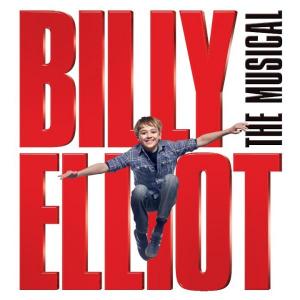
rbtl-billyelliot_1.jpg The Broadway tour of Billy Elliot: The Musical has made its stop at the Bob Carr Center for the Performing Arts in Orlando this week. While the show was going to have a two-week engagement, lagging ticket sales unfortunately resulted in the show’s stint being shortened by a week. Consequently, it plays through this Sunday only. And if you can obtain tickets to the show, I highly recommend you do so. This is a great show that has a very rich and moving story told by some excellent actors (many of whom are children) who display an extraordinary amount of talent. The musical is pop-rock in design (what else would you expect from Sir Elton John,who wrote the show’s music?) and while enjoyable, isn’t the most memorable aspect of the show. That would rest in the actual dancing that is prominent in many of the scenes and the beautifully moving story of a young boy who dared to be different in a time of upheaval and extreme adversity.

The backdrop of the story centers on a striking community of  coal miners in Northern England, who are enduring the conservative anti-union leadership of newly-elected British Prime Minister Margaret Thatcher. These blue-collared men are making a harsh decision to abstain from work, which is taking an extreme financial and emotional toll on their families. The Elliot family consisting of a father, his youngest son Billy, eldest son Tony, and his mother (Grandma) have been hard hit by the strike, with both Dad and Tony unemployed. We also learn early in the show that the family is without its matriarch, who died presumably when Billy was quite young. Amid the strike, Dad is giving Billy what little money he has to send him to get skilled in the hyper-masculine sport of boxing. But, Billy’s interest lies instead in ballet dancing. And he begins taking lessons with a caring yet tough dance instructor named Mrs. Wilkinson, who after recognizing Billy’s extraordinary potential, inspires him to pursue an audition with the Royale Ballet School of London.

Of course, when Dad and Tony discover that Billy is actually learning the traditionally female-dominated skill of dance, they loudly disapprove and put it to a screeching hault. As the story moves into Act II, Dad and the rest of the mining community slowly shift their support behind Billy, realizing that his talent for dance may be a golden ticket to a better life, one that none of them ever had the opportunity to live.  The main characters of Dad (Rich Hebert), Tony (Cullen R. Titmas), and Grandma (Cynthia Darlow) are wonderfully performed. Each actor has a long extensive list of Broadway show credits to his or her name. But the real scene stealers are Billy (played by Kylend Hetherington at my performance–but rotated among several child actors) and Mrs. Wilkinson (Leak Hocking–who was in the OBC of Billy Elliot). Both actors are tremendous. Hocking brings her character to life; and Hetherington not only demonstrates his extraordinary skill in dancing, but his ability to sing and tear at the audience’s heart strings. “Dear Billy (Mum’s Letter)” had everyone around me in the theater crying; and the dream sequence in Act II featuring Billy and his envisioned older self is breathtaking.

The entire show is inspirational, uplifting, and thought-provoking. It has a lot of highs and a lot of lows. And although it’s almost three hours in length, it keeps a fast pace without one boring lull.  The cast is full of child actors, each of which is fantastic. Billy’s best friend Michael is wonderfully played by Cameron Clifford. His character is an interesting one that somewhat perplexed me. He has a taste for female clothing and has a feminine personality, which is somewhat of a distraction in several scenes that attempt to depict ballet dancing as a sport fitting for men rather than an emasculating art. While he provided some great opportunities for comic relief, his character may have been a bit too stereotypical for my liking. Nonetheless, by the end of the show, your heart melts for him. The sets of the show are also incredible! Many set changes take place within the set itself as drawer-like contraptions expand and shrink settings and scenes. And a stage that is at once completely full of scenery, props, and sets quickly becomes one of a barren dance floor, punctuated by lights and shadows that are brilliantly manipulated to illustrate a scene.

While I wouldn’t say the music of the show is its best quality, it isn’t bad either. Some of the numbers like “We’d Go Dancing” and “Angry Dance” provide an excellent sense of emotion that is humorous and sweet in the former and angry and relentless in the latter. Overall, this show was fantastic. The acting, dancing, technical aspects, and overall production make this show one that is worth seeing. If you aren’t moved by the touching and beautiful message of Billy Elliot, then it’s time to have a little introspection. Because this is one amazing musical that will make  you shed a tear or two,  crack a smile, and triumphantly cheer! It’s one of those rare shows that will enlighten your mind and lift your spirit. It’s sad the show didn’t have a longer life on Broadway. But luckily for us, it’s here in Orlando this week and it shouldn’t be missed. Billy Elliot The Musical plays through Sunday at Orlando’s Bob Carr Center for the Performing Arts.

Monday, January 23, 2012

Theater Review: Les Miserables Revival Production

Filed under: Performing Arts — Dr. Christopher Blackwell @ 01:45

600_weis_1.jpg

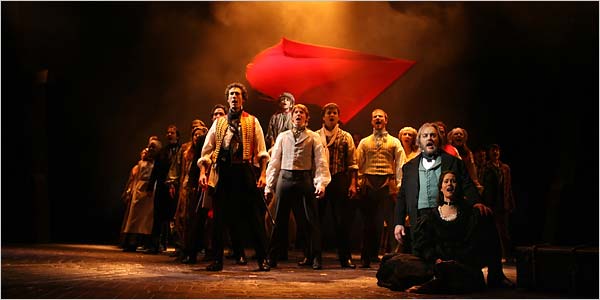
Last week I was able to experience an absolutely incredible piece of musical theater. One of my all-time favorite shows to ever grace the stages of Broadway, Les Miserables made its way to the Bob Carr Performing Arts Center in Orlando. Thankfully, I am a season ticket holder because EVERY show scheduled on its stop in Orlando sold-out! Now, mind you, I’ve seen this show probably close to 6-7 times in my life. I know every song by heart and I can visualize every nuance of every scene play-by-play. But, of all the times I’ve seen the show, I’ve never had the opportunity to see it like this! Les Miz is now 25 years old! And the production that played for years at the Broadway Theater in New York is long closed and its tour came to an end several years ago as well. But in 2006, the show’s producer, Cameron Mackintosh decided it was time to bring Les Miz back and the show was completely revamped for its revival run at the Broadhurst Theater. The show ran for two years in its renewed carnation and began preparation for its touring production shortly after it closed in January of 2008.

And in this production, the staging adds so much to the show! The famed revolving stage is gone. In its place, however, are elaborate and well-detailed sets that add a tremendous amount to the story, characters, and depiction of a France in upheaval and revolution. The sets were absolutely gorgeous and I was astonished at their scale and how wonderfully they were used to transition from scene-to-scene. While no one particular set was better than any other, the quality of the sets really stood out to me in the beginning of the show in the factory scene where Fontine is “outed” as an unwed mother and cast out of her job. The set looks like a real working factory and the workers are arranged to appear as if they truly are at work in such a sweatshop. And the acting and singing from this group of performers are outstanding! Jean Valjean is wonderfully played by Broadway veteran J. Mark McVey, who played Valjean in the Broadway production 2,900 times! His voice and ability to melodically display his dynamic range was breathtaking. He performed the role, one of the most difficult to play, with the utmost talent and beyond. And Andrew Varela’s Javert was menacing yet beautiful at just the right times (eg. “Stars” and “Soliloquy”). Perhaps the actor who really stole the show, however, was Max Quinlan, who played the role of Marius. His voice was powerful yet youthfully aloof at just the right times (“In My Life,” and “A Heart Full of Love” are both great standout moments for the actor). I believe he played this role better than any other I’ve ever seen do so. His coupling with Jenny Latimer’s Cossette was stunningly perfect.

The roles of Fantine (Betsy Morgan) and Eponine (Chasten Harmon) were also played quite well; the actors had just the right mix of operatic and non-operatic vocal ability that they shone bright during numbers such as “I Dreamed a Dream” and “On My Own.” And the ensemble, including the children cast in the show (Kylie McVey–Little Cossette and Young Eponine; Anthony Pierini–Garoche), brought an unparalleled dedication to their roles that made you forget they were the background of the story. The only minor complaint I have was with the actors who played the comedic roles of Madame Thenadier and her husband (Shawna Hamic and Richard Vida–both of whom played the roles on Broadway). These characters require voices that are giddy and require comedic inflection and tone. While these two certainly provided the much-needed comedic relief in a show that desperately needs some, I’ve seen others perform these roles much better. But this was a very minor criticism of this production.

The revival of this show did something I have not seen before; it topped its predecessor. Ragtime had a fantastic revival about 2 years ago that was much more minimalistic compared to its behemoth original production at the then Ford Center for the Performing Arts (now the Foxwoods Theater, home to my now all-time favorite show Spider-Man: Turn Off The Dark). Both were fantastic in their own unique ways; but the original certainly had much more of an opulent feel of grandiosity that the smaller revival couldn’t compete with. Here, with Les Miz, I think we have the opposite. The minimalistic qualities of the original production and its revolving stage and dark bare sets are augmented tremendously, making this production almost superior to the original. Les Miserables will always be known and respected as one of the most beloved musicals of all-time. That distinction is well-deserved even though newer shows like Spider-Man: Turn Off The Dark, Titanic, and even (now older) Miss Saigon far surpassed it in-terms of the “Wow!” factor! In this new production, however, that “Wow!” factor has been amplified, making this production one that is surely not-to-be-missed. Check out lesmis.com to see the tour schedule and see a preview for the new revival production of Les Miserables below:

Wednesday, January 4, 2012

Spider Man: Turn Off The Dark Earns the #1 Spot on Broadway!

Filed under: Performing Arts — Dr. Christopher Blackwell @ 02:32

spidey_musical.jpg

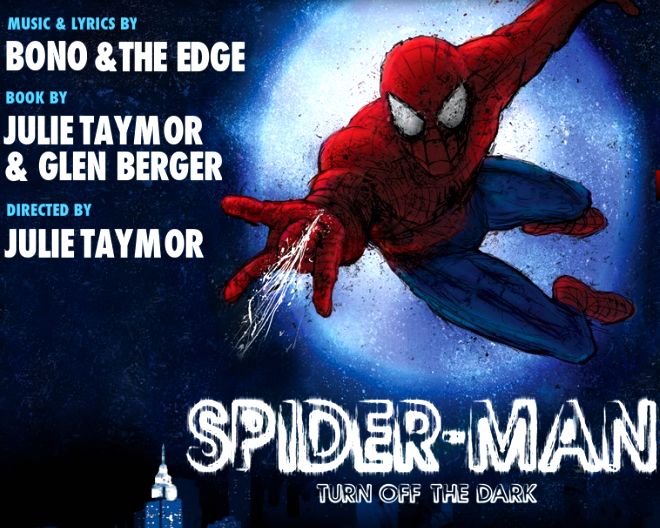
Spider Man: Turn Off The Dark earned its highest per-week gross total ever last week. The rock musical, with music and lyrics by Bono and The Edge, raked in $2.94 million and smashed its competition soundly! Wicked came in second with $2.7 million; but this marks the first time Spidey has earned the top-spot on Broadway beating both the famed show that turns The Wizard of Oz upside down and the Disney behemoth The Lion King! Spider Man: Turn Off The Dark is the most expensive production ever produced for the stage, costing a staggering $75 million! Despite a shaky preview season that saw its director get replaced amid a handful of technical mishaps that injured some of the actors in the show, Spider Man: Turn Off The Dark has become a huge hit! I am excited to be seeing the show again this weekend and had the honor of seeing it back in July at the Foxwoods Theater. It is hands-down the BEST show I have ever seen. If you’re in NYC anytime soon, you’d be sadly mistaken to leave a trip to this show off your itinerary! Congrats to the entire cast of this absolutely incredible show for this incredible accomplishment!

Wednesday, December 7, 2011

Theater Review: Lincoln Center’s South Pacific Broadway Tour

Filed under: Performing Arts — Dr. Christopher Blackwell @ 04:37

media_bloodymaryr.jpg

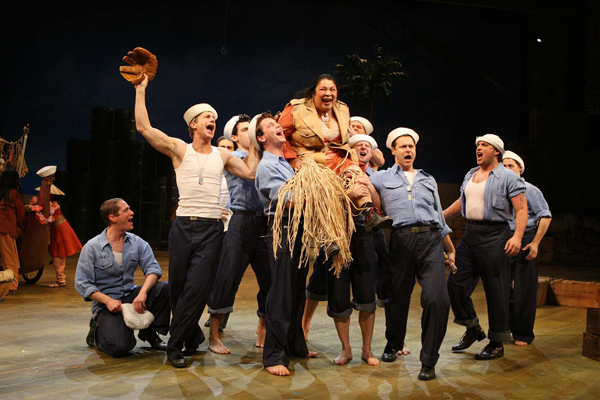
The Lincoln Center Theater’s 2008 production of South Pacific has launched its national tour and it has made its way to the Bob Carr Center for the Performing Arts in Orlando. This version of the show is a completely redesigned staging of the classic musical that won 7 Tony Awards (including Best Revival of a Musical) in 2008. I wish I could tell you I had seen any other production of South Pacific; but I never have. So, I have no other benchmark in which to compare this newly conceived staging of a musical that opened on Broadway in 1949! That being said, I’m afraid this fresh perspective provided very little in-terms of entertainment; and it had very little impact. The singing, orchestrations, and sets are top-notch. But, the story seems so “been there, done that, got the t-shirt” that I didn’t find it to be very engaging at all. In fact, you know there’s a problem when you find yourself staring at your watching wishing the curtain would close just to get you out of your misery. This show has its ups and downs; but its downs far outweigh its ups, resulting in a boring 3-hour event.

The story takes place in, well, the South Pacific circa World War II. A group of nurses is stationed on a South Pacific island and one, Nellie Forbush, has fallen in-love (quite quickly) with local French man Emile de Becque, who we discover, is living on the island somewhat in exile. After the opening numbers, the scene shifts and the audience is introduced to the other main characters in the story–the Navy men who are stationed on the island–who are then joined by a young handsome Lt. Joseph Cable. Military leaders need assistance from de Becque in navigating some spy missions on the island and in Act II, he and Cable join forces to carry the missions out. Before partnering up and embarking on their journey, however, Cable falls in love with a local polynesian woman and Nellie discovers de Becque is a widower father of two mixed-race children. Act II then develops this plotline further as both characters struggle to reconcile their love for an opposite-race person with the fact opposite-race relationships go against their social mores and could never be reality back home in the United States.

Like I mentioned, the traditional South Pacific Rodgers and Hammerstein music and Robert Russell Bennett score are both soaring. And the actors in this production have more than enough chops to pull off the demands of the libretto. Katie Reid performs the role of Nellie extravagantly and has a gorgeous voice that is perfect for the part. And Shane Donovan’s voice seems perfectly fitted for the role of Lt. Cable. And while Marcelo Guzzo’s voice is beautiful, the accent of his Emile de Becque is so harsh and overdone that the vast majority of the lyrics he sings are incoherent and jumbled. It was so bad, people around us were actually laughing at their inability to decipher his words during the long, drawn-out, and overdone number “This Nearly Was Mine” in Act II. Although Guzzo’s slightly heavy accent was bothersome, the real problems I had with the show was in its book. The story moves at a snail’s pace. By intermission (which occurs 90 minutes after the show’s initiation!), I mentioned to my friend watching the show with me that I think I could’ve told the entire story up to that point in about 4 numbers!

The songs, while beautiful, often had several reprises that didn’t significantly add to the emotion of the scene. For example, the ending part of “I’m Gonna Wash That Man Right Out of My Hair” was repeated at least 3 times, which did nothing but extend the scene unnecessarily longer than needed. The emotion of the show is also lacking. But, this might have a lot to do with the era of the musical itself more than its quality. Remember, it was first staged in 1949. While I could relate to the internal struggle of the main characters’ strife with falling in love with someone from a different race, this has been depicted so much more effectively in more recent shows like Memphis, Hairspray!, and Miss Saigon. And unlike those three examples, which made a gigantic emotional impact on me personally in their portrayal of similar internal conflict in opposite-race couples, South Pacific did not.

Some musicals have content that is worth revisiting from a historical perspective. Cabaret is a powerful musical that combines elements of the horrors of Nazi Germany with the social entertainment of the time to make a statement about genocide that only solidifies its disgusting occurrence in world history. Titanic is a timeless story of the ill-fated luxury liner and graciously portrays the stories of each class and the main socialites who were aboard the ship for its doomed maiden voyage. And shows like Ragtime and Parade depict real events in American history that show how racism, fascism, and anti-sematism poisoned our culture. A revival of those shows makes sense because their stories are timeless.

But the themes of South Pacific are not timeless. Struggles with societal and cultural acceptance of opposite-race relationships are an unfortunate reality of America’s past and present. And when more modern theater has demonstrated similar story lines but have delivered them in a much more powerful and effective manner, perhaps older outdated productions like South Pacific feel out of place and in the end, feel a little inferior as well. South Pacific plays at the Bob Carr Performing Arts Center through Sunday.

Monday, November 7, 2011

Theater Review: The Addams Family Broadway Tour

Filed under: Performing Arts — Dr. Christopher Blackwell @ 00:03

65822874.jpg

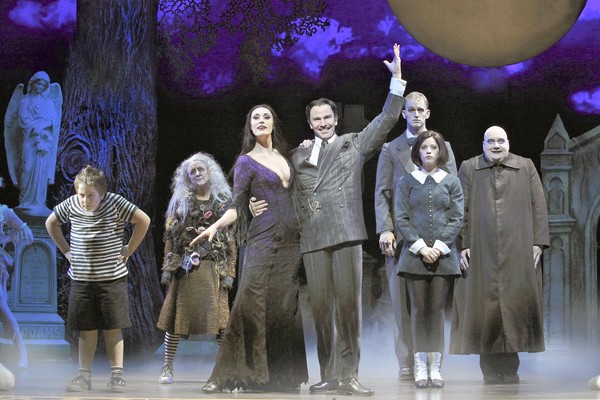
The national tour of the hit Broadway show The Addams Family made its way through Orlando last week making a stop at the Bob Carr Performing Arts Center. This version of the show is slightly different from its Broadway counterpart, which closes at the Lunt Fontanne Theater (the same theater that housed my beloved Titanic) in January of 2012. Of course the show is based on the famous bizarre Addams Family characters of Gomez, Fester, Morticia, Wednesday, Pugsly, Lurch, and Grandma. But the Broadway incantation, which has largely been panned as a sloppy and messy show without any true plot line was rewritten for its tour by Andrew Lippa. And unfortunately, while I haven’t seen the version in New York, this one left a lot to be desired. That doesn’t mean I didn’t like the show–I did! It was funny, the songs were very good, and there was a TON of comedy that really kept a smile on my face throughout the vast majority of the show.

But for all the fun the show conjures up, it has numerous shortfalls. Its basic plotline is weak. In a nutshell, Wednesday has fallen in love with straight-laced Lucas. She tells her father early in Act I and the two hold their secret during the remaining of the Act as Lucas’ family joins the Addams Family for a dinner. Obviously, Lippa has been quite inspired by La Cage Au Follies (The Birdcage) as the macabre Addams have to act “normal” as to not threaten the relationship between the two young lovebirds. While that part of the plot is rather formulaic, the events that transpire during the dinner are quite hilarious. And the pinnacle of Act I is “The Game,” which is a funny take on the classic adolescent game of truth or dare. Act I ends solid. I was pleasantly surprised at how excellent the music, acting, and comedy was flowing.

Morticia is played wonderfully by Sarah Gettelfinger and Gomez is  craftfully played by the handsome Douglas Sills, who portrays a fantastic Spanish accent. Wednesday (Cortney Wolfson), Pugsly (Brian Justin Crum), Lurch (Tom Corbeil), Grandma (Pippa Pearthree), and Fester (Blake Hammond) play their parts well. So, it’s of no fault of their’s that Act II of The Addams Family unfortunately fails. Act II sees struggles between the main characters (Morticia/Gomez, Wednesday/Lucas) that never really make any sense. I felt as if I had missed something in the show, particularly in the conflict between Wednesday and Lucas. Their relationship hinged on their differences; yet the entire second act is predicated on their differences as nothing but a source of tension. The songs of Act II, while certainly good, also fail to bring the storyline anywhere significant. At times, tunes like Morticia’s “Just Around the Corner” and Fester’s ode to the moon seem thrown in just to kill time. They make no true contributions to advance the storyline.

One major star of the show, however, is its look. The sets are INCREDIBLE. A curtain effect is employed to conceal set changes that happen rapidly and leave the audience in awe. And the look of the Addams’ mansion, the opening scenes in the graveyard, and a scene of Fester dancing with the moon are excellently well-depicted. The skills used in the execution of these scenes and the talent of the set designers in a way, steal the show. In the end, The Addams Family is a VERY fun and VERY funny show. Did it sweep the Tony’s and leave an impact on me in the same way as so many other live performances have? No. But, it did make my face sore from laughing and smiling for a solid two hours. See The Addams Family for the lighthearted show it is. But, keep your expectations low or you’ll find your cynical side taking over. Photo Courtesy Orlando Sentinel.

Monday, October 31, 2011

Theater Review: Parade at Ford’s Theater

Filed under: Performing Arts — Dr. Christopher Blackwell @ 01:40

hdr_parade.jpg

I am speaking at the American Public Health Association conference this week in Washington, DC. I have planned my trip to DC several months ago after being notified that my proposal was accepted. And I also learned around that same time that the musical Parade, one that I have desperately wanted to see for a long time, was going to be produced at the historic Ford’s Theater (the famed location of President Lincoln’s assassination); consequently, I assured myself I would finally see Parade and planned my trip accordingly. Parade originally opened on Broadway in 1998. The show was directed by famed stage director Harold Prince (The Phantom of the Opera) and was produced by the massive (yet ultimately bankrupt) Livent Productions, the same production company behind RagtimeParade is one of those few musicals that achieves what only a few others ever have; it is so effective, chilling, and haunting, it creates an atmosphere that is strikingly unpleasant, yet beautiful. And that unfortunately resulted in its inability to be a commercially successful Broadway production; it’s life at the Vivian Beaumont Theater was cut short after only 84 performances.

The story of the show centers around the true life events of the 1913 murder of 13-year old Marietta, Georgia factory worker Mary Phagan and the subsequent framing and anti-Semitic-driven conviction of the factory’s Jewish superintendent, Leo Frank. The south was rife with extremely racist and anti-Jewish sentiment at the turn of the Twentieth Century. Jews were considered greedy industrialists who abused laborers, including children, for their own financial profit. This mixed with the racially-charged hatred of Blacks in the South sets the somber tone of Parade. The DC production is headed by Tony-nominee Euan Morton, who plays the idiosyncratic Jewish mannerisms of Frank perfectly well. His acting and singing are amazingly on-target as is that of Jenny Fellner, who plays Franks’ wife Lucille, who would become the heroine of the story by the Second Act. The supporting cast is as strong as the principle actors, particularly the performance of Kevin McAllister, who plays Jim Conley (who ultimately was largely believed to be the real culprit of Phagan’s murder).

The music of Parade is outstanding. The score took home the Tony in 1998 and it was obviously well-deserved. The first number (“The Old Red Hills of Home–Part 1”) is a simple ballad that eventually leads into a march-like ensemble number (“The Old Red HIlls of Home–Part 2”) which serves to introduce the still bitter post-Civil War Georgian White citizens of Marietta. But perhaps the most moving numbers come later in Act One. Phagan’s funeral scene is riveting and the number “Funeral” not only displays the sorrow of the friends and family she left behind, but their growing anti-Semitic hatred and bloodthirsty quenching for revenge. And when Frank is on trial (“Trial IV”), his character bursts into a musical over-the-top depiction of the false behaviors being described by the witnesses testifying against him that while providing some comedy relief, is also chilling. The Second Act is also supported by strong numbers, particularly “Rumblin’ and a Rolin.” This is the Act’s opening number that shows a desperate Lucille Frank interrupting a drunken ragtime dance party in the Governor’s Mansion in an attempt to save her husband’s life. Again, writer Alfred Uhry (who won the Tony for Best Book of a Musical in 1998 for Parade) knows how to take his audience on an emotional roller coaster–he manipulates the audiences’ craving for gaiety and  any semblence of lightheartedness and quickly replaces it with the grim reality of the situation.

In the end, Parade is a highly effective piece of musical theater that depicts an event in American history that was a pathetically perfect example of a hatred-fueled misjustice. The show uses a score that is just as moving and unsettling when it is extremely simplistic as it does when it is more grand. The Ford’s Theater production of Parade couldn’t have been any better. I was honored to be able to see the final show of its run. The story, music, and near-perfect direction and performances left me speechless; and this show really moved my spirit. Theater can make an enormous impact and reach down into your soul and truly make a mark on your psyche when it is executed perfectly. The Ford’s Theater Production of Parade certainly left me with an experience I won’t be forgetting anytime soon.

Monday, October 3, 2011

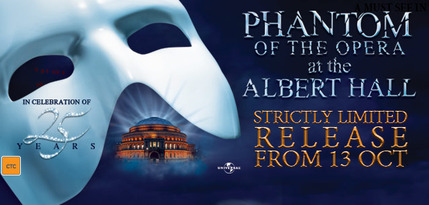
Theater Review: The Phantom of the Opera 25th Anniversary Performance Live from London’s Royal Albert Hall

Filed under: Performing Arts — Dr. Christopher Blackwell @ 00:37

large_phantom-of-the-opera_638×305_v2.jpg
The Phantom of the Opera turned 25 years old today and an amazing spectacle of the classic show was staged at London’s Royal Albert Hall to celebrate the occasion. Phantom Live was beamed via satellite to movie theaters across the United States and other parts of the world on Sunday. The show began at 2pm ET (8pm London time) and was attended by celebrities and numerous actors, producers, and other key players of the musicals’ success, including composer Andrew Lloyd Webber and producer Cameron Mackintosh. This production was incredible! The ensemble cast was more than double the size of the standard Phantom production, which gave numbers like “Masquerade” and even “Prima donna” an amazing power that was seen in the motion picture version of the film but is impossible to replicate on the stage.

In addition to the large cast, a 200-piece orchestra provided the lush background score for the musical, sending chills up and down my spine countless times during the show. The Phantom score has some incredible woodwind and string accompaniment that sets the darkness of the show and also adds to the music’s rich beauty. With an orchestra of such an enormous size, all of this was amplified amazingly well in this production, yet still not quite to the richness found in the movie version of the musical. The sets and staging were much different here as well. While the sets of the traditional stage are ever-changing and punctuated by special effects and pyrotechnics, much of this was accomplished by large digital projections which spanned the entire stage from left-to-right and above the orchestra, that was placed above the action on the stage. A scaffolding bridge also served to execute certain numbers (eg. the first journey Christine takes with the Phantom down to his liar).

The digital projections worked most of the time and even added to the show’s elements, with a projection of the phantom engaged in the background of various scenes. For example, this is seen when the Opera Populaire’s managers read the Phantom’s notes signaling the need to replace Carolotta with Christine Daae in the opera’s production of Il Muto. Simultaneously, in the superior projection, an image of the Phantom writing the notes is seen along with a scrolling of their words. The only issue with the digital projections came with a few of the closeup shots, where the screens could be seen in the background and appeared slightly pixilated.

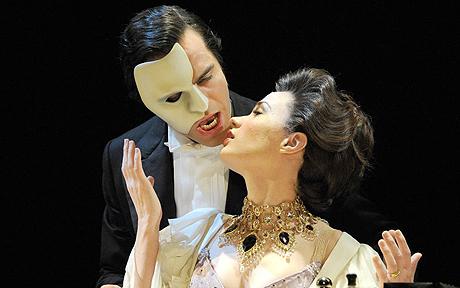
The actors in this 25th Anniversary spectacular were phenomenal! They were by far the best cast I have ever seen perform in these roles; and I’ve seen this show presented on Broadway, in Las Vegas, and on countless national tours. Of course, the strongest of the cast were the leads. The Phantom was played by Ramin Karimloo, who not only provided his breathtakingly gorgeous voice for the Phantom, but gave what can only be described as a tour de force performance! I have never seen an actor play that role more perfectly. Christine Daae was played by Sarah Boggess, who gave a spine-tingling performance and made the theater erupt with applause many times during the show, which is quite an accomplishment given I was watching it in a movie theater!

“Wishing You Were Somehow Here Again” was probably the highlight of the show; and the audience in the Royal Albert Hall applauded for a solid two minutes at the song’s reprisal. Both of these actors are Phantom veterans who were most recently seen in these roles in Webber’s Phantom sequel Love Never Dies in the West End. The supporting players were also great. My only criticism is for Hadley Fraser, who played the role of Raoul, the Vicomte de Chagny. While Fraser has a great powerful voice, the role of Raoul has a sense of sweetness and tenderness that seemed to be lacking.

The Phantom of the Opera 25th Anniversary performance at the Royal Albert Hall was simply put, beautiful. Anyone who is a fan of the show should see this staging during its encore showings in theaters nationwide. If you’re unable to make it, the show will be released on DVD in November. But, even the most window-shattering home theater systems will not do this production justice. It really should be enjoyed on the big screen in the theater. For a list of showtimes and dates (there are only a few) to see the show at a theater near you, click the link below: http://www.fathomevents.com/performingarts/series/phantomoftheopera.aspx. Below is a trailer for the show:

Friday, September 16, 2011

Broadway Updates: Behind the Scenes of Love Never Dies Film with Andrew Lloyd Webber

Filed under: Performing Arts — Dr. Christopher Blackwell @ 18:16

love-never-dies_1593408c1.jpg While the Melbourne production of  Love Never Dies, Andrew Lloyd Webber’s sequel to his beloved musical The Phantom of the Opera is making its move to Sidney to resume its run, the final performances in Melbourne were filmed for an international DVD and Blu-Ray release in February of 2012. Take a look at some behind the scenes footage with Sir Andrew Lloyd Webber himself by accessing the link below. Reports indicate Webber supervised the entire filming of the production, which is sure to be incredible intimate for sure:

http://media.theage.com.au/entertainment/red-carpet/reel-theatre-love-never-dies-captured-on-film-2624367.html

« Newer PostsOlder Posts »

Powered by WordPress